
Educational article — general information only
Iron Ore and the ASX: One Commodity, Half the Index Story
Published 19 July 2026 · Updated 26 July 2026

No single number explains more ASX trading days than the iron ore price. Through BHP, Rio Tinto and Fortescue — three of the index's largest weights — the steel-making commodity's moves flow directly into the Australian market's headline number.
Understanding that transmission — ore price, to miner earnings, to index weight, to market mood — turns many confusing ASX sessions into simple ones.
The transmission mechanism
Iron ore majors operate with largely fixed costs: mines, rail and ports cost similar amounts to run whether ore sells high or low. That makes earnings ferociously leveraged to price — a modest ore move produces an outsized profit move, and markets price the leverage immediately.
Because the three majors carry heavy index weights, their repricing becomes the index's repricing. A strong ore print can float the entire ASX green on a day when most stocks are actually flat.
China writes the demand side
The overwhelming share of seaborne iron ore lands in China, feeding steel for construction and infrastructure. Chinese property sentiment, stimulus announcements and steel-mill margins therefore drive ore prices — often before official data confirms anything.
This is why Beijing policy headlines move Perth mining stocks within minutes, and why the resources sector serves as the ASX's real-time vote on Chinese growth.
Supply, seasonality and the second-order effects
Supply matters too: Brazilian output disruptions, Australian cyclone seasons and new-mine ramp-ups all move the balance. Seasonal patterns — Chinese construction cycles, weather windows — add rhythm that traders watch closely.
Second-order effects spread beyond miners: the AUD tracks ore strength, mining-services companies follow capital-expenditure cycles, and even state budgets (and hence infrastructure spending) ride royalty revenues.
Watching it well
For most investors the lesson is not to trade ore — it is to recognise when the index is telling an ore story. Check what iron ore did overnight before reading an ASX move as sentiment about Australia; frequently it is sentiment about Chinese steel.
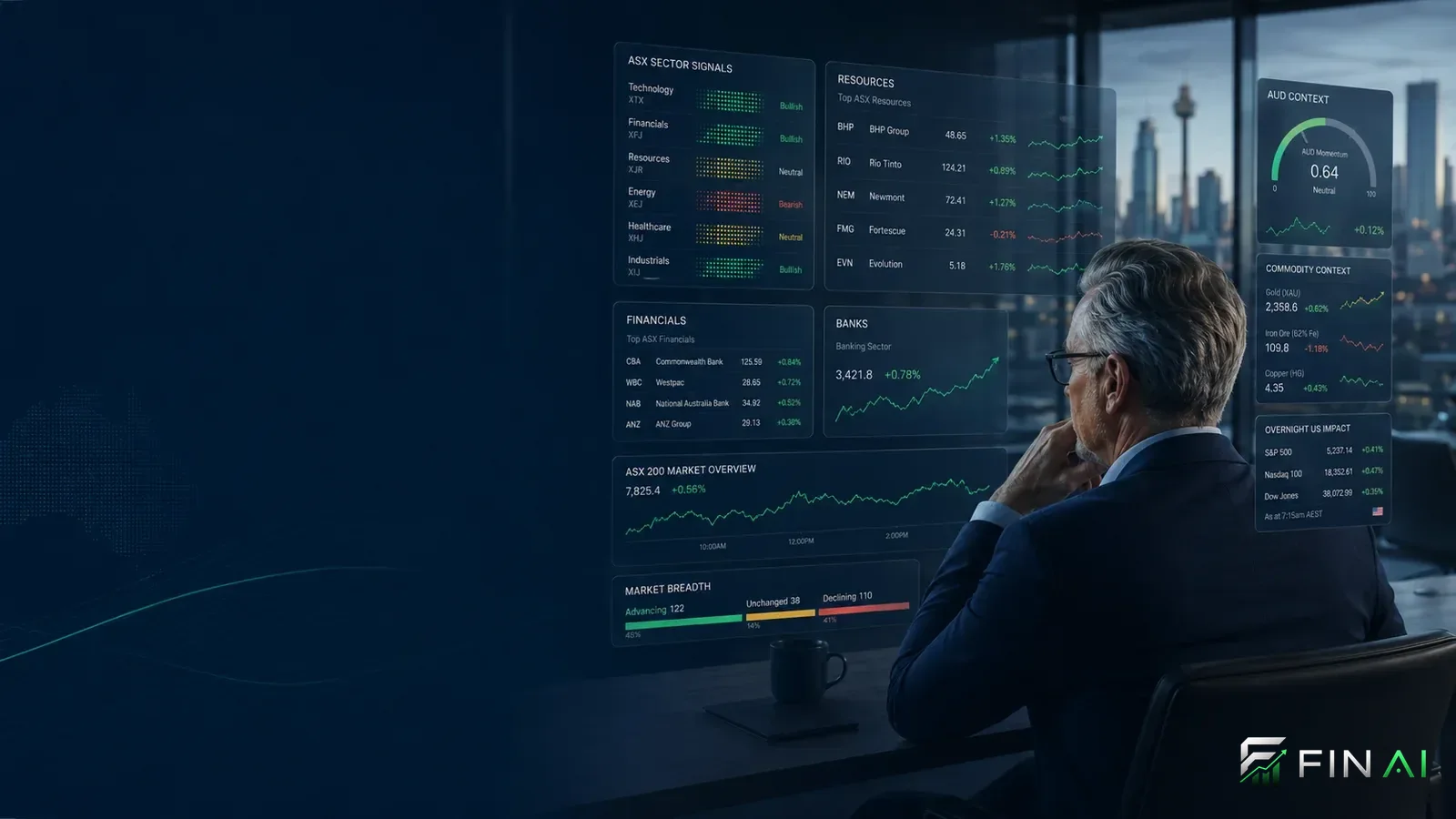
FinAI folds commodity context into its resources-sector posture so that connection is visible at a glance. General information, not advice — commodity markets are volatile and can reverse without warning.
Frequently asked questions
- Why do iron ore prices move the whole ASX index?
- BHP, Rio Tinto and Fortescue carry large index weights, and their fixed-cost operations make earnings highly leveraged to the ore price. Their repricing becomes the index's move.
- What drives iron ore prices?
- Chinese steel demand dominates — construction, infrastructure and stimulus expectations — with supply events (Brazilian disruptions, Australian weather) and mill margins shaping the balance.
- How fast does China news reach ASX miners?
- Within minutes during trading hours: ore futures and mining stocks reprice on Beijing policy headlines long before economic data confirms any change.
- Does FinAI track commodity prices?
- Commodity context is folded into the resources-sector posture and market view as general information, so ore-driven days are recognisable as such.
FinAI is an AI-assisted market intelligence platform for Australian investors. It does not provide personal financial advice or execute trades.
Request Australian access